

Don't Speak
I'm better when I cry.

I’m better when I cry. Healing comes to me in the form of tears.
I was so small when I learned to swallow my argument—to surrender my body, my resistance, my words, and my instinct to protect myself. The lessons lingered and festered for years.
As a grown woman, I stood frozen in an arena of rage—and susceptible to spiritual abuse. Why did I stay silent?
What led me to feel disembodied and disempowered?
When I ask these questions and take the time to listen, to pause, to feel, to allow memories and sensations to rise, a mural of images and sensations present themselves. And what I uncover is not cause—but correlation. Not blame, but insight.
It seemed normal as a child for fear to be used as a tool for my education, sculpting my behavior as a small child. For spanking to punctuate the lesson.
You will not do this again.
Trained to submit—to not object—to my body being struck in order to direct and teach me, to discipline me, is it any wonder that disembodiment would also become a practice?
I was loved, warmly and consistently by two deeply spiritual people. I was not abused as a child, but I was sensitive. And I was a handful.
Growing up even in the kindest and most loving of families where corporal punishment is accepted as godly discipline—as truth embedded through instructional welts on the leg—I see that silencing my response to pain and surrendering my natural sense of physical boundaries became a mechanism for me that could be used and reused: the practice of denying my experience in order to navigate an impossible moment. Silent. Submissive.
This is not enigmatic.
It’s science.
Patterns repeated over time are ingrained in the brain, and, as it turns out, the body. The amygdala. Don’t speak becomes a mantra.
Don’t trust the body’s instinct to protect itself, to run, or to even object.
So many children have grown up with spankings, and some would say to their betterment. Good-hearted, Bible believing people have used straps and paddles in the interest of character education. Many children have become disciplined, peaceful and caring individuals in spite of having been spanked. Pastors have preached on it, books have been written proclaiming that it’s the only way to build character in children. We trust our pastors and we trust our literature. I spanked my own small children.
And now sitting in meditation, breathing in the light of my homemade candle, I sense the line of connection between who I am today and who I was then, trembling in fear and waiting for the strap. I can’t deny the connection.
***
I paint now—spiritually therapeutic creativity. I like to let the paint lead before “thinking” about the outcome.
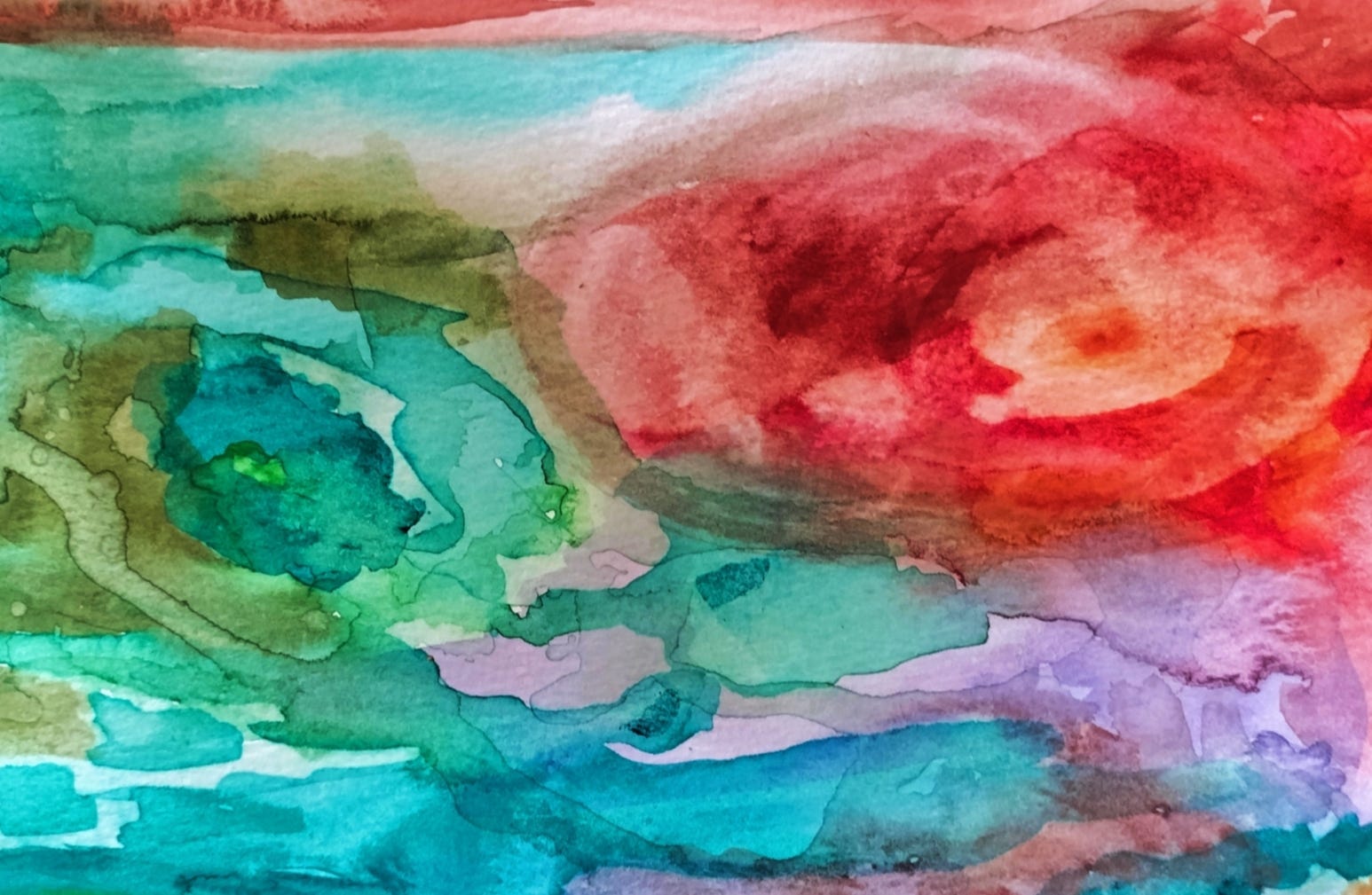
This image emerged as I moved the flowing water around to mix colors that don’t always play well together. What does this look like to me?
Mercy confronting Judgment.
Love enveloping Fear.
Grace taking bites out of the Illusion of Control.
I bow to the wisdom that shows up when we’re willing.
Mercy, love, and grace have swallowed the power of judgment, fear and control in my relationships. In my life. In everything. Maybe this is what healing looks like sometimes—listening to the body’s wisdom and allowing the truth of it to be heard and named.
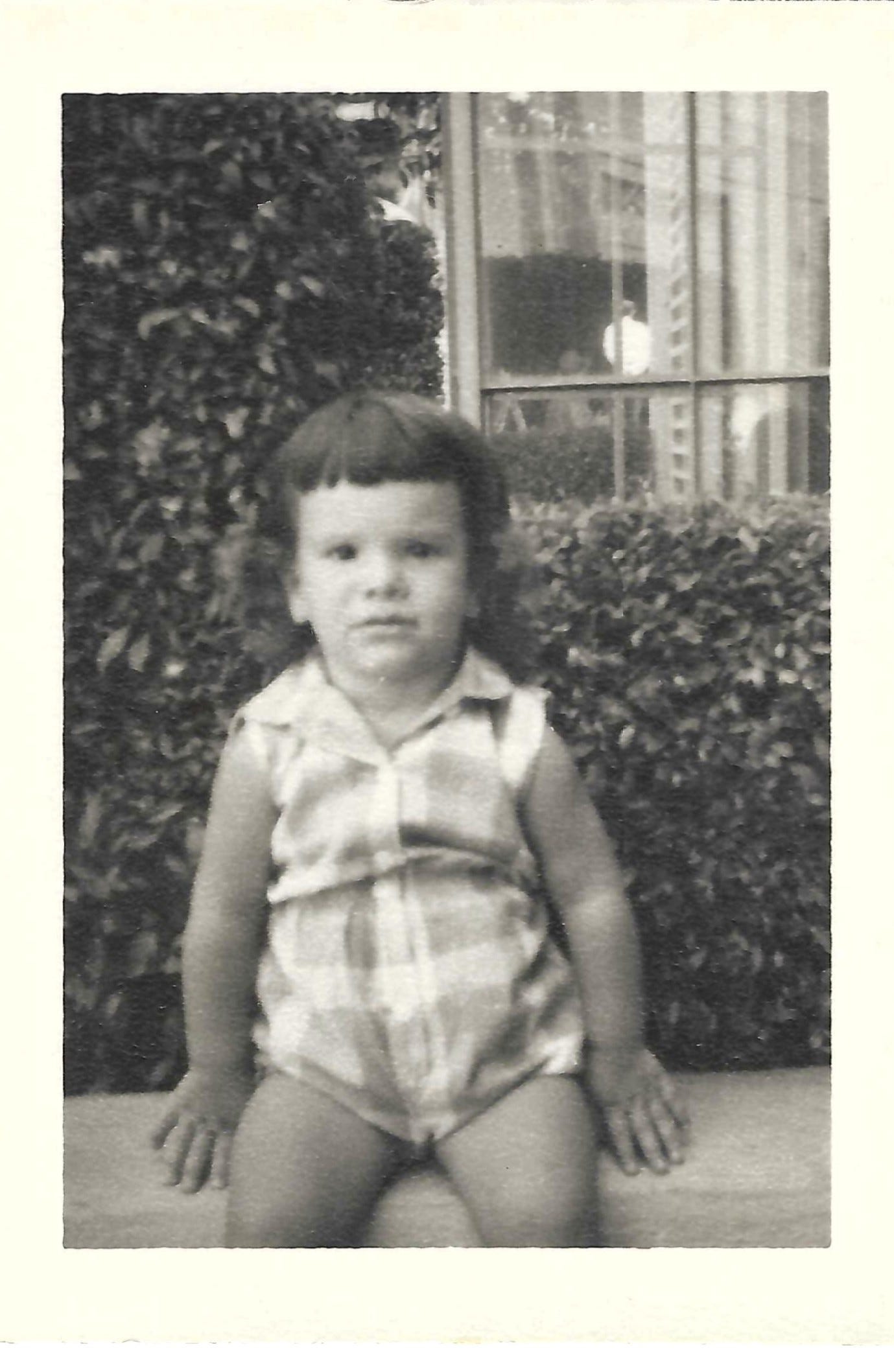
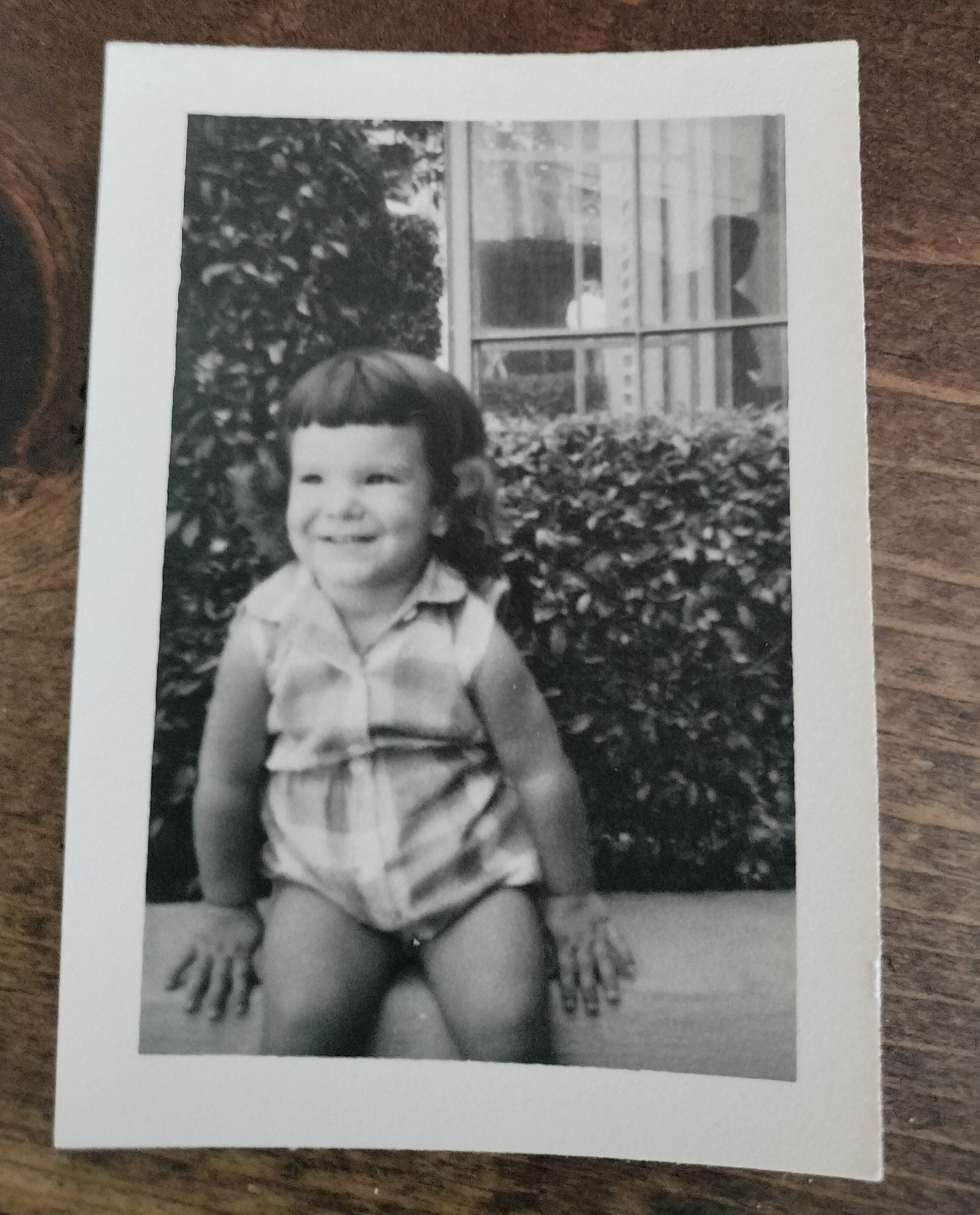
About the photos. There are as many pictures of me looking confused, sad or disturbed as there are pictures of me looking free and joyful. Both are true.
The picture on top happens to be the little one I identify with when these feelings rise to the surface. I honor her when I listen to her, and share her stories.
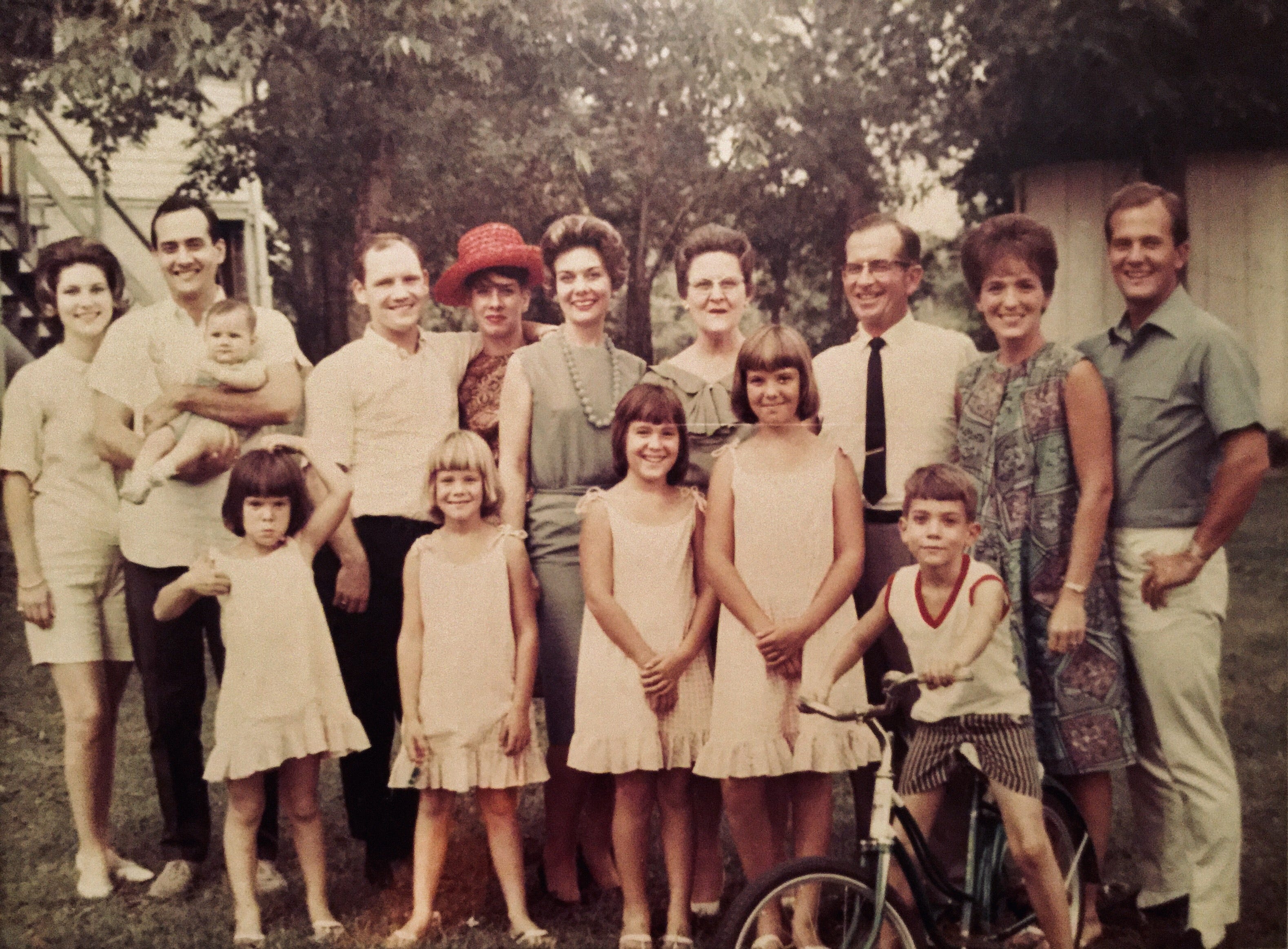
I remember the little girl in these photos! I remember her impulsiveness, her frenetic activity, her enthusiasm…and her fear. But I have also witnessed the growth and the willingness to excavate the origins of some of the default responses that were ingrained in you (and in me too!), and to question whether they continue to serve you or were just maladaptive coping mechanisms that allowed you to survive some of the mixed messages we received as children growing up in that loving, spiritual home where showering love and inflicting pain and fear came from the same people. They were raised to believe that was part of how you show that you love your children, but I remember questioning that when raising my own kids. Was I actually teaching them that inflicting pain is another way to show love? Was I teaching them that it was okay to “hit”? I ended up choosing “time outs”. But I even question THAT now. Did it say to them that disobedience led to abandonment, to ostracization, being shut away from the reach of love and acceptance. My own daughter has adopted a different approach with her impulsive, energetic and enthusiastic 6 year old young son. She pulls him away from the scenario where his inappropriate behavior took place, takes him into a quiet, dimly lit room and sits with him on her lap, doing a period of deep breathing with him, helping him to regulate his emotions and return to calm. Then she discusses his behavior, why he acted the way he did, and helps him consider alternate options if he finds himself in that situation again. If an amends or apology is to be made, she helps encourage him to understand why, how his behavior impacted someone else, and how they felt. When that very different “time out” ends, she has taught him how to calm himself, to step away from his impulsive emotions, to empathize with the person on the receiving end of his behavior, how to make amends and hopefully reconcile with the person he hurt (usually his 10 year old sister), and she has empowered him to heal the relationship and embrace some vital life lessons! His mom is a psychiatric social worker, so her method is based in solid and sound research, but most of all, her response to his behavior is consistent with the image of a loving, instructive and understanding parent who he will always feel comfortable with and of whom he is not afraid. Seems a lot better than the leather sewing strap Nana used or the long, thick elastic tubing, the “Jack LaLane Glamour Stretcher”, that Daddy and Mommy used!
As always, your writing exquisitely describes the experience, both objectively and internally, of growing up during the rather generally approved “spanking generation” that believed that if you spared the rod, you would spoil the child. Little did we know until we reached the time where hindsight and interior work revealed that our bodies still held on to the silent fear and belief that what we DID reflected our worth as a human being, and that we were petrified of speaking up or making a wrong move. We never really doubted the love, but we were definitely afraid of disciplinary consequences. They were not so much instructive, as painful reminders of how we had fallen short. Did they teach us the lesson that was intended? Or just teach us to fear the people we loved and believed loved us? Did this kind of discipline teach us how to respond differently in the future, to take the responsibility to control our emotions and behavior, or did it teach us to hide our behavior because if we got away with something, there were no consequences? Very important subject, both for the sweet little girl in the pictures, and for us all!
I value the tension in the contrasts here, Laury. The two solo portraits. The fear-based behaviors and the love. All of it resisting a tidy summing up. Like your painting. Reading this reminds me of how immensely complex life is for a child. And how as adults we find healing through honest reflection.